|
|
|
|
|
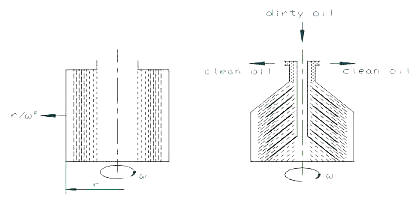
The indissoluble liquids and solids
with different densities will be separated while they are rotated at a
high speed in the bowl, where the particles with heavier density move
to the inside wall of bowl body, the lighter liquid toward the center
of the bowl. Because the centrifugal force generated in the centrifuge
fields in much larger than the gravity force, it takes only very short
time for the centrifuge separation to achieve the same separation
efficiency in the gravity fields. Especially when the gravity
separation cannot be available, the best method is used with
centrifuge separation. |
 |
|
 |
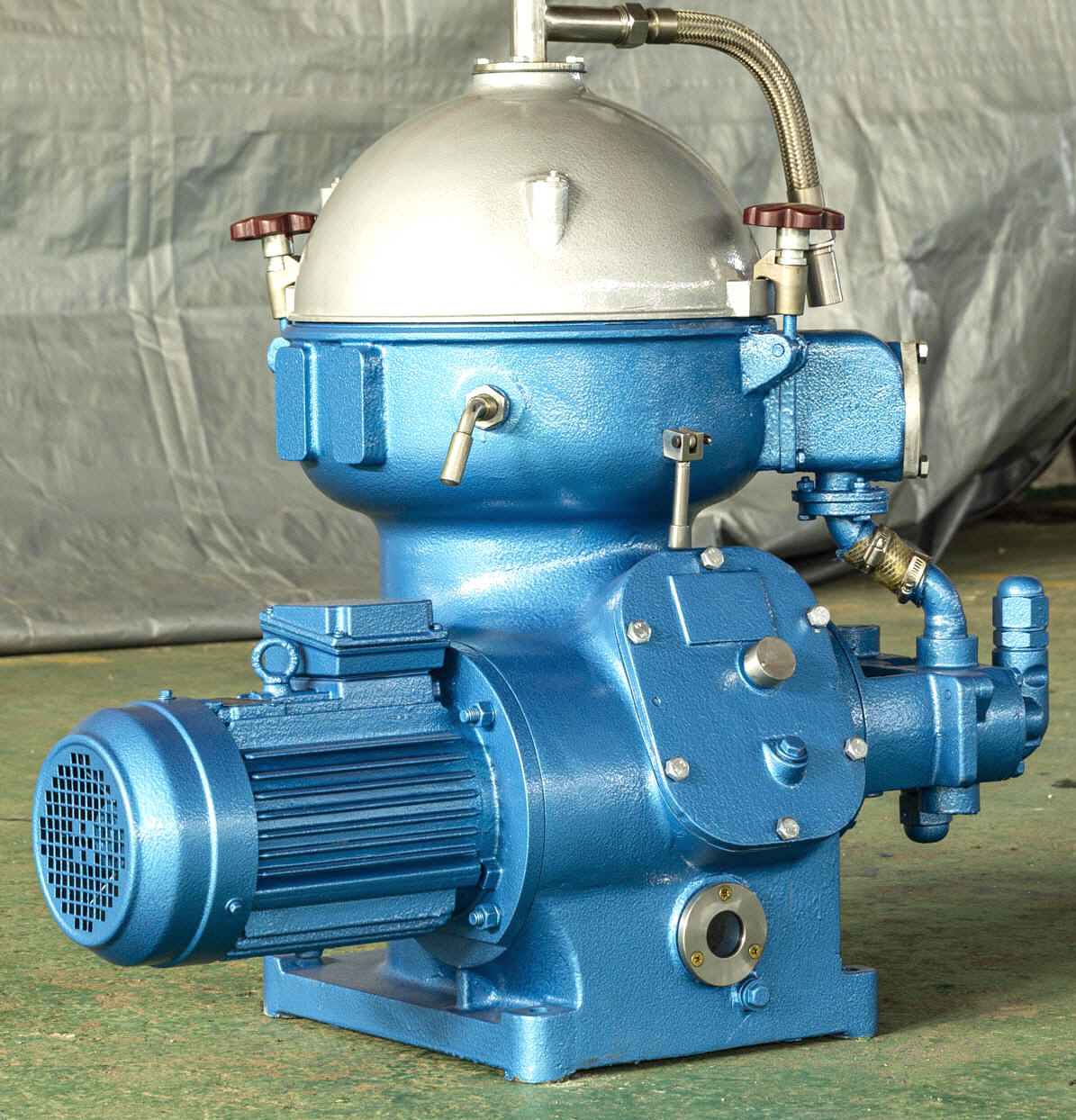
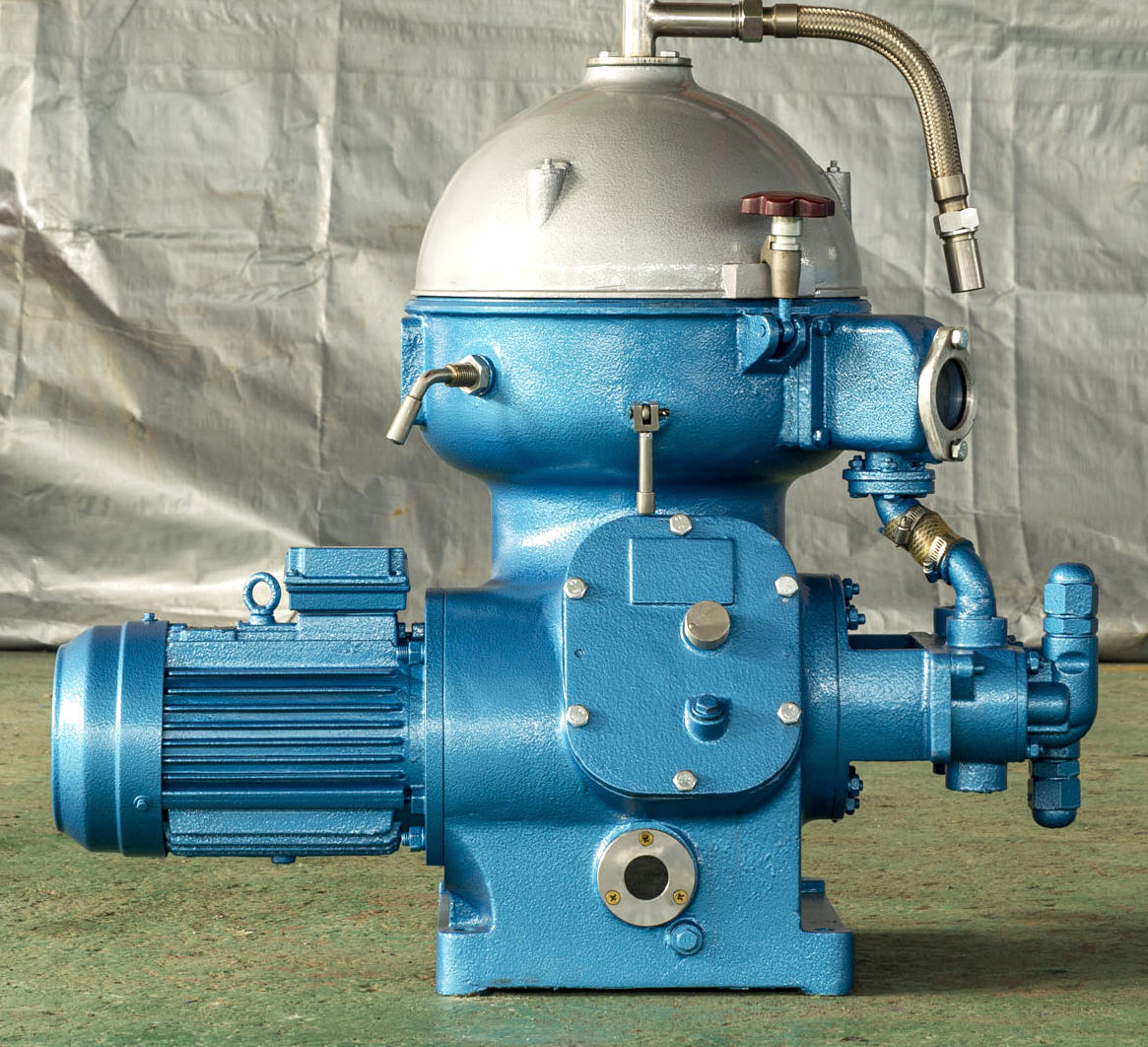
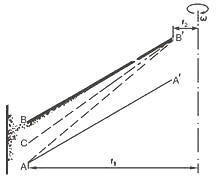
There is a stack of discs installed in the bowl, which divide the
bowl space into many conical cavities. That can shorten the
sedimentation distance and improve the separation efficiency. The
moving trace of the limit particle “A” occurs between the discs
(conical cavity), as per the requirements of application and the
bowl functions, there are 3 methods, which are purification and
clarification and concentration. Basic principle of horizontals
scroll discharge centrifuges (namely decanter centrifuges): the
light liquid, heavy liquid and solid (dregs) in the mixed liquid
(suspension) have different densities and are immiscible, and any
two or three phases therein are then under different centrifugal
forces in the centrifugal force field, resulting in different
settling velocities, then achieving the purpose of separation,
layering or settling the solid-particles. |
|
After entering into the high-speed turning drum, the solid-phase
particles in the mixed liquid run and settle on the drum wall under
the action of greatest centrifugal force; the light liquid settles at
the innermost place of the drum under minimum centrifugal force; and
the heavy liquid settles in the middle (this phase exists in case of
three-phase separation or does not exists in case of two phases); same
as the drum’s turning direction, a screw feeder also turns at a high
speed, and a constant speed difference is generated by the
differential mechanism; the solid-phase particles settled on the drum
wall are then fed by the screw feeder to the solid outlet of the drum,
and the light phase and heavy phase (this phase exists in case of
three-phase separation or does not exists in case of two phases) are
then separated out of different outlets. When used for two-phase
separation, the machine is called two-phase decanter centrifuge (also
called horizontal scroll centrifuge), and the machine used for
three-phase separation is called three-phase decanter centrifuge. In
our decanter centrifuges, the light liquid is exhausted by gravity
force, and the heavy liquid is discharged by the centrifugal force as
well.
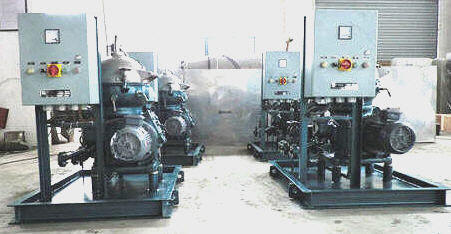
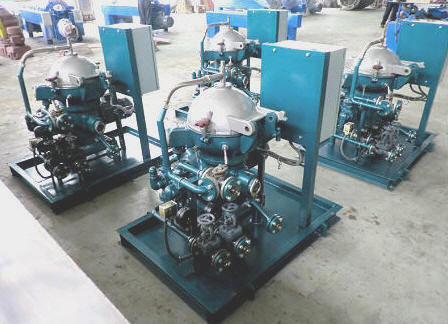
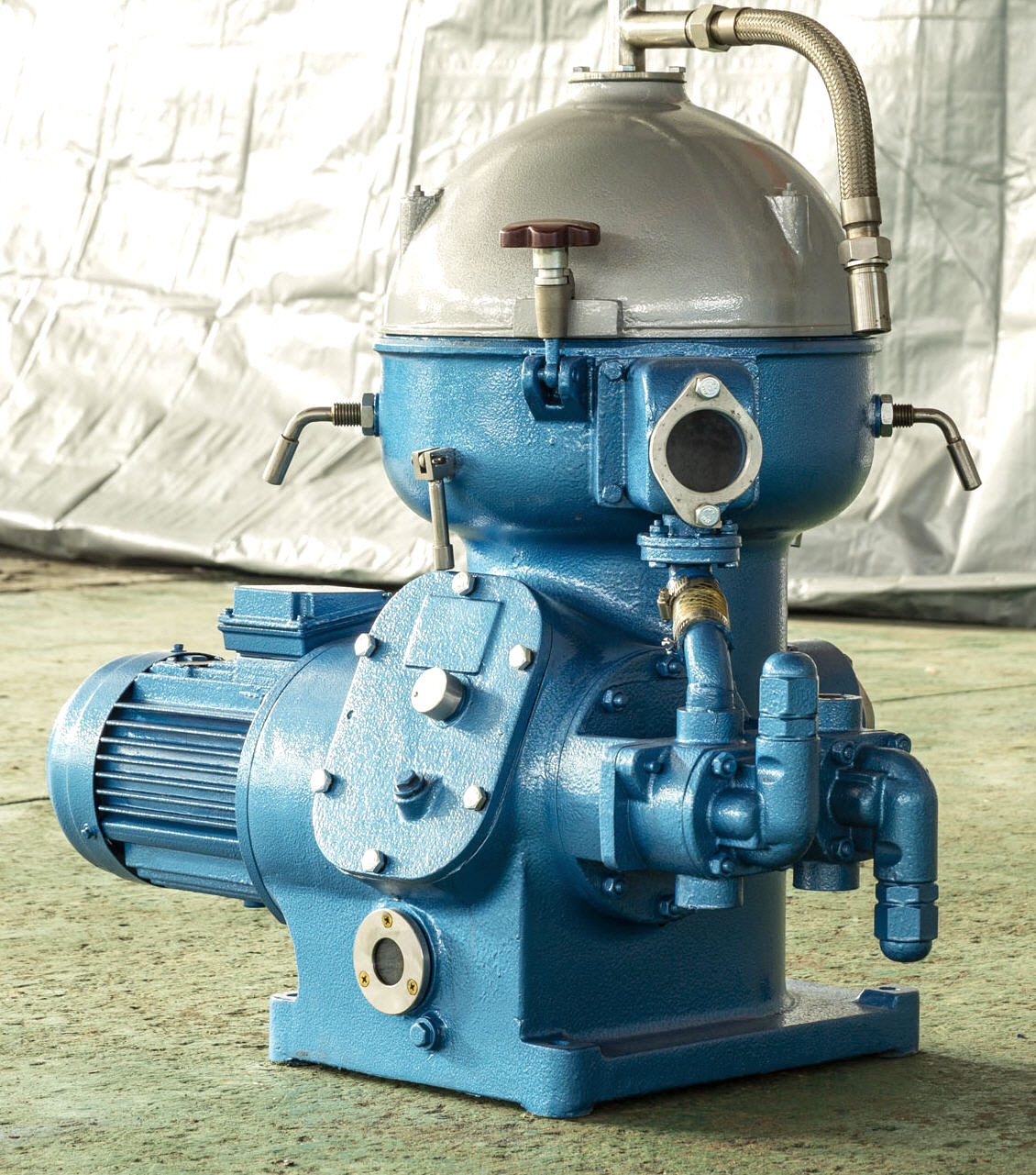
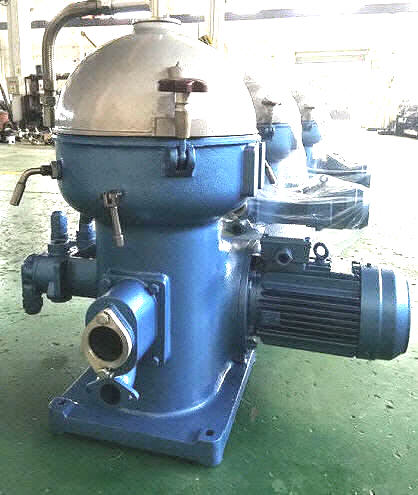
The
centrifuges are composed of a main body, a transmission device, a bowl,
a liquid trap and an inlet bearing block. A flexible principal axis is located at the upper part of the bowl and a damping floating bearing
is designed at the lower part; the principal axis is connected to the
driven wheel by a buffer seat, and power is transferred to the driven
wheel by motor via a belt conveyor and tension pulleys to achieve the
bowl rotating at extremely high speed around its own axis, forming a
mighty centrifugal field; the feed liquid is injected via the inlet
orifice at the bottom, and the centrifugal force drives the liquid to
flow up along the bowl inner wall; liquid components stratify due to
their different densities: the component with high density (solid)
settles to the bowl inner wall, and the heavy liquid settles to the
inside of the solid phase, flows out via the heavy liquid outlet and
is collected by the heavy liquid trap; the light liquid in the
components settles to the innermost part, flows out via the light
liquid outlet and is collected by the light liquid trap; the solid
phase, after depositing a period of time, can be extracted at
shutdown. If the separation involves only a liquid and a solid, then
separating heavy and light liquids is not needed. The liquid-solid
types are called G.Q. types, and the liquid-liquid-solid types are G.F.
types also. |
|
|
|
|
|
ATS-SERIES |
FLOWS (L/h)
|
DIA.
(mm) |
SPEED (rpm) |
POWER (kW) |
WEIGHT (kg) |
SPECS. |
MANUALS |
|
ATS203CD-23 |
1.500 |
230 |
6.930 |
2,2 |
245 |
SPECS.
|
MANUALS
|
|
ATS204SD-23 |
2.000 |
270 |
7.200 |
4
|
550 |
|
|
|
ATS206SD-23 |
3.000 |
315 |
6.500 |
5,5 |
650 |
|
|
|
ATS207SD-23 |
4.000 |
385 |
6.500 |
7,5 |
750 |
|
|
|
ATS209SD-23 |
5.000 |
430 |
6.000 |
11
|
900 |
|
|
|
ATS210SD-23 |
8.000 |
470 |
5.800 |
18,5 |
1.100 |
|
|
|
ATS211SD-23 |
10.000 |
500 |
5.500 |
18,5 |
1.200 |
|
|
|
|
|
|
|
SALES OFFICE:
P.T. Brightson Machinery Indonesia
Jl.Bedagai No.18-G, Medan,
North Sumatra - 20234 Indonesia
Tel.: (061) 450-2258
E-mail:
info@brightson.co.id
Monday - Friday 08:00 - 17:00 WIB
Saturday 08:00 - 12:00 WIB
TECHNICAL
SUPPORTS:
Tel.: (061) 450-2258
E-mail:
supports@brightson.co.id
Monday - Friday 08:00
- 17:00 WIB
Saturday
08:00 - 12:00 WIB
|
MANUFACTURING FACILITIES:
People Republic of China
DISTRIBUTION WAREHOUSES:
Indonesia
|
|
PLEASE CONTACT
US NOW FOR DETAILS AND INQUIRIES |
|
|
|